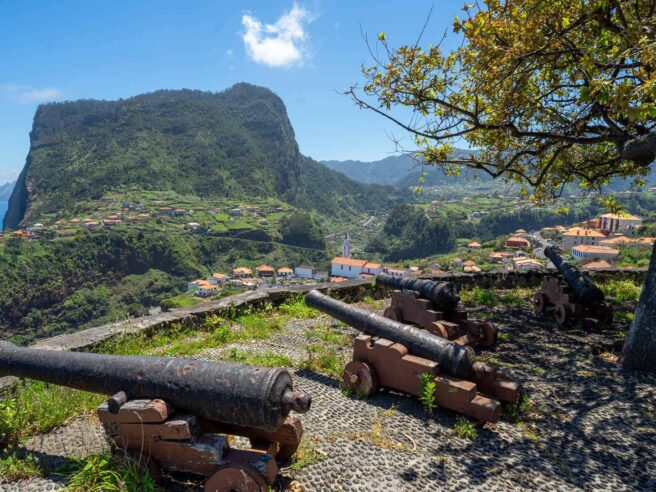
The Faial parish on Madeira Island in Portugal offers a unique blend of natural beauty and convenient connectivity. A road (regional 101) and a tunnel (via expresso) connect this parish to the main town of Santana. Additionally, it is linked to the Monte parish in Funchal via regional road 103, ensuring easy access to nearby attractions.
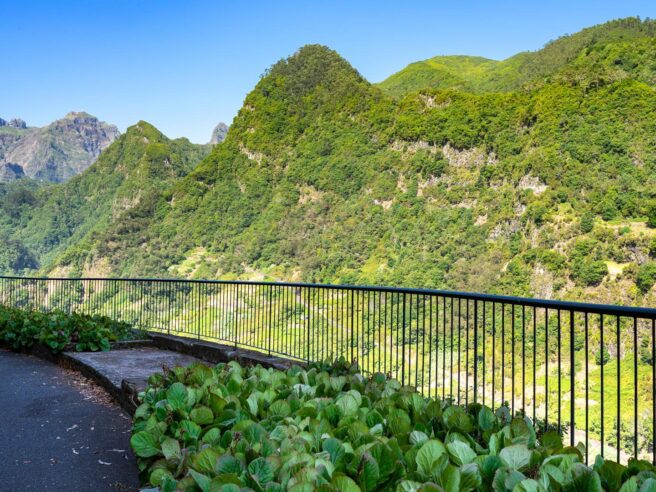
Surrounded by the Atlantic Ocean to the north and with the striking Pico Ruivo on its southern border, Faial offers a remarkable coastal experience for visitors. While agriculture is the primary activity, there are also various facilities to cater to the needs of residents and tourists alike. These include a school, a church, a health center, and even a karting track for some recreational fun.
Historically, Faial, along with the Porto da Cruz parish, played a significant role in the initial settlement of the northern part of the island. As colonization shifted towards the northern region, Faial emerged as a thriving center of population. In Gaspar Frutuoso’s “Saudades da Terra,” written in 1590, he describes Faial as having 100 households and an impressive church nestled between two towering rivers. The parish boasts an abundance of local fruits such as prickly pears, citrons, lemons, pears, apples, and walnuts.
Furthermore, Faial is home to two sugar mills, one owned by António Fernandes das Covas near Nossa Senhora, and another owned by Luís Dória. Notably, the parish is known for the significant pilgrimage of Nossa Senhora do Faial, celebrated on September 8th.
Adding to its allure, Faial features a hydroelectric power station known as “Central da Fajã da Nogueira,” located near Ribeira da Ametade, alongside the captivating levada dos Tornos in the Faial mountains.
In summary, Faial on Madeira Island offers a picturesque setting with key facilities and connectivity. Whether you’re seeking stunning coastal views, agricultural beauty, or cultural experiences, this charming parish has something for everyone.